A due diligence guide for horse farms, riding stables, and equine businesses.
In Pennsylvania, buying land for an equine business is as much a zoning-and-permitting decision as it is a real estate decision. Before you sign an agreement of sale, you must confirm whether the local municipality allows your intended use on the land, and whether your plans will be impacted by setbacks, parking, manure handling, and stormwater/erosion controls. This outline is written for equine businesses evaluating potential properties who are trying to avoid the “we bought it, but can’t use it” surprises.
In Pennsylvania, municipalities control the use of land based on how that land is “zoned” into Zoning Districts. These Zoning Districts separate incompatible uses of land. For example, manufacturing or heavy industrial uses are kept separate from agricultural or residential uses. Municipalities maintain a Zoning Map which shows where each Zoning District is located. Municipalities also maintain a Zoning Ordinance, which is the rule book for how land can be used in each Zoning District. Buyers must carefully evaluate what Zoning District land is in and what uses are permitted, because the rules can vary dramatically within each municipality. Make sure you review the Zoning Map to see what Zoning District your land is in and then review the Zoning Ordinance to see what uses are permitted.
If you are considering land for a horse farm, boarding stable, or equestrian training facility, an attorney familiar with equine-related land use and zoning can help you evaluate zoning risk before you buy.
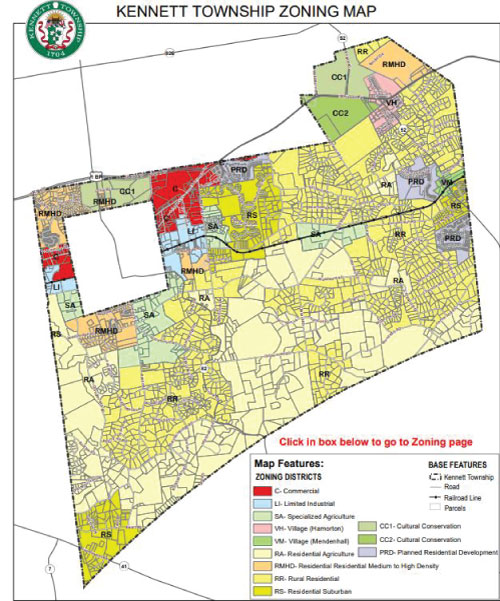
Example of a Zoning Map of Kennet Township, Chester County
What Is My “Use”? Agricultural vs. Commercial Equine Use in Pennsylvania
Zoning decisions often begin with a simple but critical question: how does the municipality classify your intended use of the property? For horse owners and equine businesses, that classification can determine whether your operation is treated as a protected agricultural use or a regulated commercial use.
What Counts as “Normal Agricultural Use” for Horses?
Under well-established Law, boarding, training, and the instruction of people in the handling, driving, or riding of horses is a “Normal Agriculture Use”. As such, municipalities may not prohibit or limit normal agricultural operations.
When Horse Operations Are Treated as Commercial Uses
Many municipalities attempt to define riding / boarding stables and lesson programs as Commercial Use since it is a business and members of the public are using the facilities on the property. These municipalities may attempt to require barns or indoor arenas to comply with commercial building codes, or place other restrictions on the use of the property as a boarding stable. Because this is a complex area of municipal and agricultural law, property owners who believe their township is improperly limiting equine uses should consult Attorney McCormack for equine-related land use and zoning.
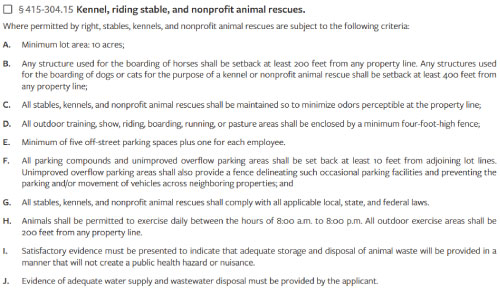
Example of the specific criteria required in Silver Springs Township, Cumberland County.
Building Constraints Under Municipal Zoning
While municipalities are not permitted to limit normal agricultural uses, they are empowered to set regulations regarding where your buildings can be located on the property itself. All buildings are required to be set back from the property lines, but some municipalities require more significant setbacks than others. These setbacks can impact where you can build your facilities, or limit how much of the property is even available for your intended use. For example, a municipality may require that your indoor arena must be set back from the property lines by 100 feet. You will not be permitted to build your arena if it is located within this setback area. Additionally, the municipality may require that you provide appropriate parking for your clients / customers, which will decrease the total amount of developable area. The municipality may also impose other restrictions on hours of operation, lighting on outdoors arenas, and manure management practices. The municipality can also limit how many horses in total you can have on the property. For example, many municipalities require at least one acre per horse. It is essential for you to review these restrictions before you commit to purchasing a property. Otherwise, you could be stuck with a property that does not fit your needs.
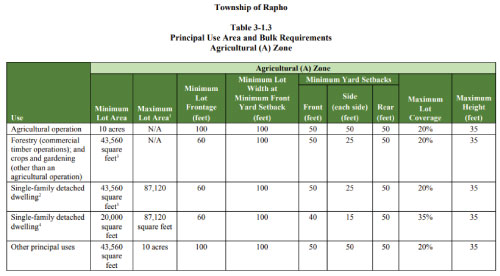
Example of area requirements from Rapho Township, Lancaster County
Zoning Variances in Pennsylvania: What Property Owners Should Know
There are possible ways to work around the restrictions imposed by a municipality, but these options are fact specific and are often far more difficult to get than is generally appreciated. The term “variance” is often used to describe any request to the municipal Zoning Hearing Board (the governmental body empowered to enforce the Zoning Ordinance). However, a municipality will not grant variance so you can build your arena within a setback or have more than one horse per acre. A variance is only granted when five specific elements are proven to the satisfaction of the Zoning Hearing Board.
The Five Legal Elements of a Variance
- Unique Physical Circumstances
The property must possess unique physical characteristics (e.g., irregular shape, narrowness, shallowness, or exceptional topography). The unnecessary hardship must be directly tied to these physical features, rather than the general conditions of the neighborhood. - Unnecessary Hardship
Strict adherence to the zoning ordinance must effectively prohibit any reasonable use of the property. This element requires demonstrating that the land cannot be developed or utilized in conformity with the existing regulations. - Not Self-Created
The claimed unnecessary hardship must be an inherent property condition. It cannot be a situation created or self-inflicted by the property owner, such as knowing the zoning restrictions prior to purchase and then claiming a hardship to bypass them. - Neighborhood Compatibility
The proposed variance must not alter the essential character of the neighborhood. It must be shown that the granted exception will not substantially impair the use or development of adjacent properties or be detrimental to the public welfare. - Minimum Variance
The requested variance represents the absolute minimum modification or relief necessary to afford relief. The board will only grant what is strictly required to make the property usable, rather than maximizing the owner’s profitability.
If you believe your property may be entitled to a variance, contact Attorney McCormack to review the Zoning Ordinance before you purchase the property.
Due Diligence Checklist Before Buying Equine Business Property in Pennsylvania
For horse owners, trainers, and equine businesses, zoning due diligence is critical to avoiding the “we bought it, but can’t use it” problem. Before you commit to a purchase, consider the following steps:
- Confirm the Zoning District and Permitted Uses
Obtain the municipal Zoning Map and identify the district for the property, then review the Zoning Ordinance to see whether horse farms, boarding stables, or riding arenas are permitted, conditional, or prohibited uses. - Review Definitions of Agricultural and Commercial Uses
Carefully read how the ordinance defines “agriculture,” “stable,” “riding school,” “boarding stable,” or similar terms, and how your operation fits—or does not fit—within those definitions. - Evaluate Setbacks and Buildable Area
Overlay required setbacks, buffers, and environmental constraints on a survey or sketch of the property to see where barns, arenas, parking, and access drives can realistically be located. - Check Environmental and Stormwater Requirements
Identify any special rules for manure management, stormwater basins, or erosion control. - Assess Horse Density Limits and Parking Requirements
Determine how many horses you can legally keep and how much parking is required for clients, staff, and events. - Consult an Equine and Real Estate Attorney
Before you sign or finalize an agreement of sale, have your zoning and land use issues reviewed by an attorney with experience in equine law and real estate transactions.
How Aevitas Law Helps Horse Owners and Equine Businesses
Municipal Zoning Law is a complex area of law that combines local politics, commercial influence, and civil litigation. For many people, Zoning Ordinance are confusing and local township staff are often just as confused. If you are considering purchasing land for equestrian uses, contact Attorney McCormack for a consultation before buying land you cannot use.


